Solutions overview
 Account take over (ATO)
 Digital Impersonation
 Credit card data theft
 Man in the Middle (MitM)
 Remote desktop takeover
 Credential stuffing
 SEO poisoning
 For security teams
 For fraud/risk teams
 For digital business teams
 Library
 Blog
Blog
 Glossary
 Partner Up
 About
About
 News
News
 Events
 Careers
 Contacts
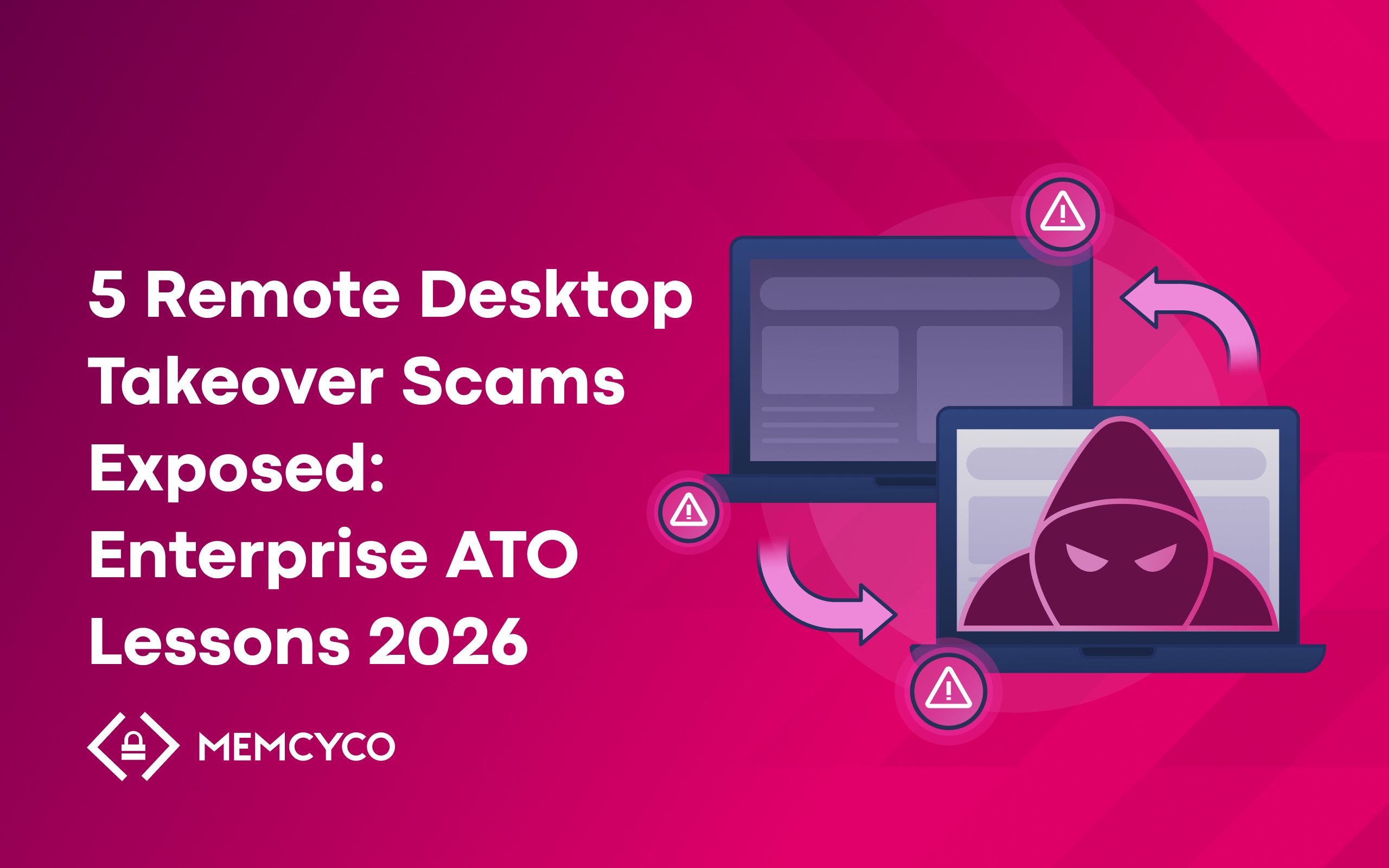
What Is Remote Desktop Takeover?
Remote desktop takeover is a scam-based attack in which threat actors manipulate victims into granting remote desktop access to their device or active session, allowing attackers to observe activity, harvest credentials, or guide user actions in real time. These attacks rely on digital impersonation and trust abuse rather than technical exploitation.
Remote desktop takeover is especially dangerous because it uses legitimate tools, valid credentials, and real user sessions, making malicious activity appear normal to both users and security controls.
How Does Remote Desktop Takeover Work?
Impersonation and Social Engineering
Attackers pose as trusted brands, financial institutions, or support teams, creating urgency around fabricated issues such as security alerts or account problems.
Use of Legitimate Remote Desktop Tools
Victims are instructed to install or approve widely used remote desktop software, such as AnyDesk or TeamViewer, granting attackers live access to their session.
Real-Time Session Abuse
Attackers join the legitimate session from a remote location, observing user activity, capturing credentials or one-time authentication codes, and manipulating what the victim sees.
Fraud and Account Exploitation
With live session access or harvested credentials, attackers initiate unauthorized actions, enable account takeover, or steal sensitive data.
Without effective protection, remote desktop takeover often bypasses traditional defenses because the activity occurs inside legitimate sessions using approved tools.
Memcyco’s Solution for Remote Desktop Takeover
Most defenses only recognize remote desktop takeover after damage has occurred, because these attacks originate from recognized devices, use valid credentials, and appear legitimate.
Memcyco’s remote desktop takeover solution:
Detects indicators of remote access affecting active user sessions in real time, even when legitimate tools are used
Alerts organizations when a remote party joins a user’s session under suspicious conditions
Provides real-time, victim-level visibility into users and access attempts influenced by attackers
Enables targeted response actions, such as user warnings or policy-based controls on sensitive workflows
This allows organizations to disrupt remote desktop takeover attacks while they are in progress, before attacker-guided sessions escalate into fraud, data theft, or account takeover.