secures $37M Series A to preempt Digital Impersonation & ATO scams   🎉

Research: why fraud prevention must start before login

RETAIL & ECOMMERCE

Stop retail impersonation before it steals shopper trust and revenue

Memcyco helps e-commerce brands uncover fake stores, cloned storefronts, SEO-poisoned impersonation, and high-risk access attempts in real time, stopping shopper diversion before it drains revenue, fuels payment fraud, or damages trust.

What retail and e-commerce teams are facing

Fake stores steal ready-to-buy traffic

Fake e-stores, cloned storefronts, deceptive ads, and SEO-poisoned results siphon shoppers away before they reach the real site.

Scam journeys hijack the purchase moment

Attackers use discounts, seasonal demand, limited-time offers, and familiar brand cues to make fake shopping journeys feel legitimate.

Teams find out after shoppers are already exposed

Many controls trigger at login, checkout, payment, chargeback, or customer complaint stages, after the fake journey has already done its damage.

Retail accounts are packed with reusable value

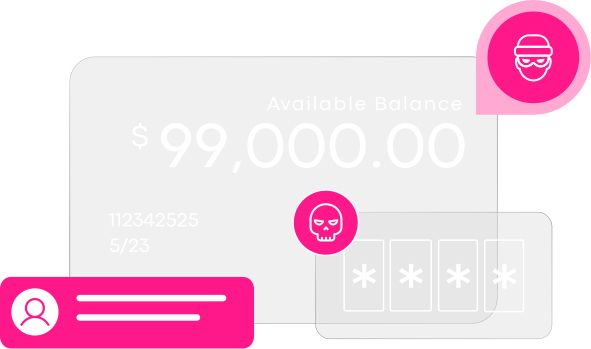
Saved payment methods, loyalty points, gift cards, order history, refund access, and personal data make retail accounts worth stealing.

One fake journey creates multiple fraud paths

Once attackers capture data or gain access, fraud can spill into gift card scams, card-data misuse, payment disputes, account recovery, and customer care queues.

Every commerce channel becomes an attack surface

Shoppers move across search, ads, marketplaces, social, mobile, and email, giving attackers more places to blend into legitimate buying journeys.

Preemptive protection from retail impersonation and fraud

Memcyco helps e-commerce teams act while fake commerce journeys are still unfolding, connecting shopper exposure, attacker behavior, and access risk before fraud reaches accounts, payments, or customer care.

Shut down fake commerce journeys earlier

Detect fake e-stores, cloned storefronts, SEO-poisoned results, deceptive ads, fraudulent apps, and social impersonation as attacks emerge, with automated rapid takedown before more ready-to-buy shoppers are diverted.

Connect exposed shoppers to the risk they create

See which customers, accounts, and devices are linked to fake stores or impersonation assets, so teams can prioritize risk before stolen data is reused.

Protect real data with marked decoys

Replace at-risk credentials or card data entered on fake forms with marked decoy data, protecting real customer data while blocking adversaries and turning attacker activity into real-time actionable fraud insight.

Contain risky access before it turns into loss

Use real-time risk signals to stop or contain high-risk login attempts, including isolating attackers in a controlled environment before they can abuse accounts, payments, rewards, or stored data.

Reduce the operational blast radius

Limit account takeover, payment fraud, fake gift card scams, investigation effort, customer care queues, and brand disruption.

Together

these capabilities help retail teams move earlier in the attack lifecycle, before fake shopper journeys become lost revenue, fraud exposure, and operational fallout.

Trusted by global businesses, backed by analysts

Global bank reduces ATO by 55%

55%

Reduction in ATO Incidents

$18M

Annual Savings Realized

Zero

Mean-Time-To-Detect

But don’t just take our word for it

What security and fraud prevention leaders say about Memcyco

Innovation That Sets a New Standard

Recognized as a game-changer in cyber fraud preemption

SOLUTION BRIEF

Learn how Memcyco helps ecommerce brands protect revenue and brand equity

The window of exposure

The window where scams succeed

The Window of Exposure is the time from when a scam goes live, to when it is taken down. That is when account takeover can succeed, before your controls see or do anything.

CAPABILITY COMPARISON

A quick way to see what changes when protections shifts into the scam phase.

CAPABILITY

WITHOUT MEMCYCO

TRADITIONAL SOLUTIONS

WITH MEMCYCO

With Memcyco

Detection
Timing

After discovery, or after impact.
In-attack, during scam exposure and at authentication, before takeover completes.

Scope

External monitoring, takedown, and server-side controls.
Real-time signals on the genuine channel, plus cross-channel monitoring and correlation

Victim Visibility

None, victims remain unknown.
Per-victim identification and device mapping.

Prevention

Limited, often reduced to alerts or broad friction.
Decoy credentials, deception, and optional quarantine.

Threat Reponse

Manual workflows and slow escalation.
Automated takedown initiation, device flagging, and risk enrichment.
Operational Benefits

A clearer operating picture for every team

See account, payment, and gift card risk before fraud reaches customers or recovery workflows. Real-time user, device, and access context helps teams prioritize action earlier.

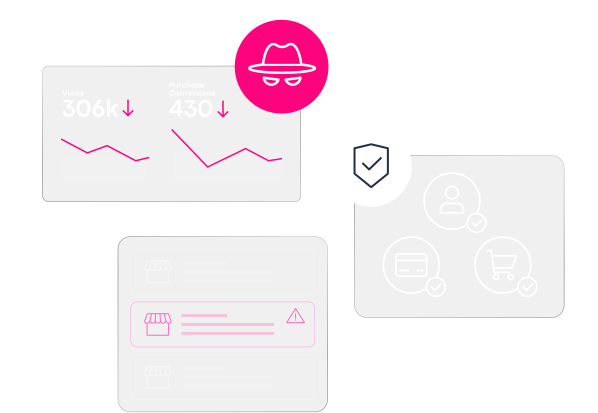
See fake stores, exposed customers, suspicious devices, and access risk in one attack flow. Earlier evidence helps teams prioritize incidents faster and reduce “is this real?” investigation cycles.

Protect shopper journeys and conversion paths without adding blanket friction. Teams can reduce customer confusion, support pressure, wasted campaign spend, and brand fallout from fake stores and impersonation campaigns.

Other sectors we serve

Credit Unions

Credit Unions

Protect member trust, reduce ATO exposure, and ease fraud response and account recovery pressure on lean teams.

Crypto & E-wallets

Crypto & E-wallets

Secure customer access, reduce account recovery pressure, and gain visibility into fake login, wallet impersonation, and credential theft journeys.

Banks

Banks

Reduce ATO exposure, protect customer login journeys, and ease fraud, liability, and account recovery pressure.

Hospitality

Hospitality

Preserve guest trust, reduce booking support pressure, and gain visibility into fake reservation, payment verification, and loyalty account journeys.

Logistics

Logistics

Preserve customer trust, reduce support workload, and gain visibility into fake tracking, customs fee, and redelivery scam exposure.

Airlines

Airlines

Protect loyalty revenue, reduce account recovery pressure, and gain visibility into fake booking, refund, and mileage theft journeys.

Utilities

Utilities

Protect customer trust, reduce service desk and fraud investigation workload, and gain visibility into fake billing portals, payment scams, and account impersonation journeys.

Education & University

Education & University

Shield student and staff account compromise, secure tuition payment journeys, and ease IT helpdesk pressure from fake portals and credential theft.

Get a Custom Demo

See it in action and discover why others switch to Memcyco

Get a demo to learn how Memcyco customers:

  • Identify individual scam victims in real-time
  • Predict and preempt ATO incidents
  • Deceive threat actors

Frequently asked questions

What is retail brand impersonation?

Retail brand impersonation happens when attackers create fake stores, cloned storefronts, lookalike domains, fraudulent ads, social pages, or fake apps that imitate a legitimate retailer. These scams divert shoppers, harvest credentials or payment data, and damage customer trust before shoppers reach the real site.

How do fake e-commerce stores lead to retail fraud?

Fake e-commerce stores and cloned checkout pages can trick shoppers into entering login credentials, payment details, loyalty information, or personal data. Attackers can then use that stolen data to attempt account access, commit payment fraud, abuse rewards, or target future shopping journeys.

Is retail account takeover the same as payment fraud?

No. Retail account takeover can lead to payment fraud, but it can also involve loyalty abuse, gift card theft, refund fraud, promo abuse, order history exposure, or account recovery pressure. Payment fraud is often one downstream outcome of compromised account access.

Why do legacy fraud controls miss fake store scams?

Many legacy controls focus on activity inside the retailer’s own site or checkout flow. Fake store scams often start outside that environment, through lookalike domains, deceptive ads, social impersonation, SEO-poisoned results, or cloned storefronts, before the shopper ever reaches the legitimate site.

How can e-commerce teams reduce fraud without adding friction for legitimate shoppers?

Retail  teams can reduce fraud by using real-time risk context to focus action on suspicious access attempts, risky devices, and customers linked to impersonation exposure. This helps protect accounts and checkout journeys without applying blanket friction to every legitimate shopper.

How does Memcyco help e-commerce protect shoppers and accounts?

Memcyco helps retail teams detect digital impersonation activity, identify exposed customers and risky devices, use marked decoy credentials and card data, and act on high-risk access attempts before they become account takeover, payment fraud, card-data theft, or customer disruption.

Demo-booking-arrow